










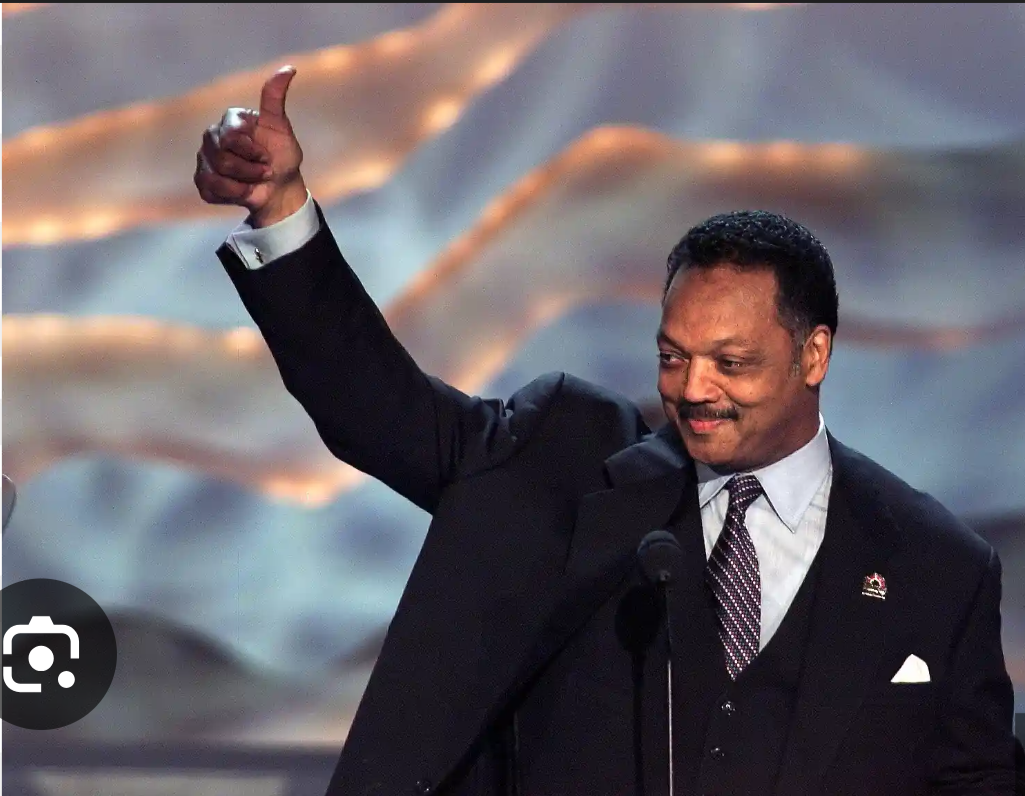
On February 17th, the world lost renowned civil rights activist and protégé of Martin Luther King Jr., Jesse Jackson. Jackson was one of the most prominent civil rights leaders in the late 20th and early 21st centuries, serving as a shadow delegate and shadow senator for the District of Columbia.
Jackson was born in Greenville, South Carolina, on October 8th, 1941. He grew up in Jim Crow laws and was taught just to accept the segregation. He went along with it until the infamous bus boycott of 1955. Jackson attended a racially segregated high school, Sterling High School, where he was elected student class president. He earned letters in football, baseball, and basketball, and after high school, he attended the University of Illinois to play football on a scholarship. He later transferred to North Carolina A&T, a historically black university. He transferred from Illinois because racial prejudice prevented him from playing quarterback, and the school was predominantly white. At A&T, he became active in civil rights protests, and he graduated with a B.S degree in sociology in 1964. After, he attended the Chicago Theological Seminary on a scholarship. He was three classes short of his master’s degree, and focused on the civil rights movement.
Jackson started working for Martin Luther King Jr. in 1965, as he participated in the Selma to Montgomery marches organized by James Bevel, Martin Luther King Jr., and other civil rights leaders in Alabama. King gave Jackson a role in the Southern Christian Leadership Conference (SCLC) after he was impressed by Jackson’s drive and organizational abilities. In 1966, Jackson was hand-picked by King and Bevel to head the Chicago branch of SCLC’s economic arm, Operation Breadbasket, and was promoted to national director in 1967. Under Jackson, a key goal was to encourage massive boycotts to pressure white-owned businesses to hire blacks and purchase goods from black-owned firms. Jackson became more involved in SCLC leadership when Martin Luther King Jr. died. Jackson was one floor below him when he was shot, and he claims that King died in his arms.
After getting into multiple disputes with Martin Luther King’s successor, Ralph Abernathy, he and several others left the SCLC and formed a new organization named Operation PUSH. Jackson aimed it towards politics and to pressure politicians to work to improve economic opportunities for blacks and poor people of all races.
In 1984, Jackson resigned from Operation PUSH to run for president of the United States, where he finished third in the Democratic nomination. He ran again in 1988, where he was the runner-up in the Democratic nomination to Michael Dukakis. His running paved the way for future black political leaders.
Jesse Jackson was a pioneer and inspiration to many, and his death will surely weigh on a bunch of people’s minds.