







As students chat with peers and study for tests in the halls on the way to class, they unknowingly breeze by BASH’s fascinating historical plaques and artifacts in the hallways.
This history can be found in various places around the school, from major clusters located at the East Entrance and near the Freshman Building.
Amongst the historical displays, there is a wide range of how old and new the artifacts are.
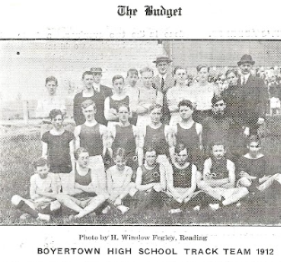
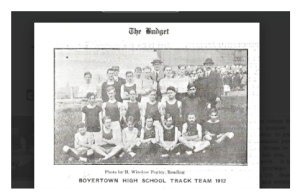
A monumental photo of the Boyertown class of 1922, the first class to graduate from the Freshman Building, is hung on a wall near the 100s. Many students do not notice this, as it is in a nook on the left at the top of the stairs.
BASH student Ava Berkosky says, “I think I noticed it before while leaving out that door during a fire drill, or something, but I never really noticed what it was.”
The 1922 class photo is easily made up of 30 students, which heavily contributes to its historical value- the tiny class size is most likely a BASH record. The photo is also compelling because of the students’ hairstyles and accessories, unique with no common factor, creating a sense of mystery.
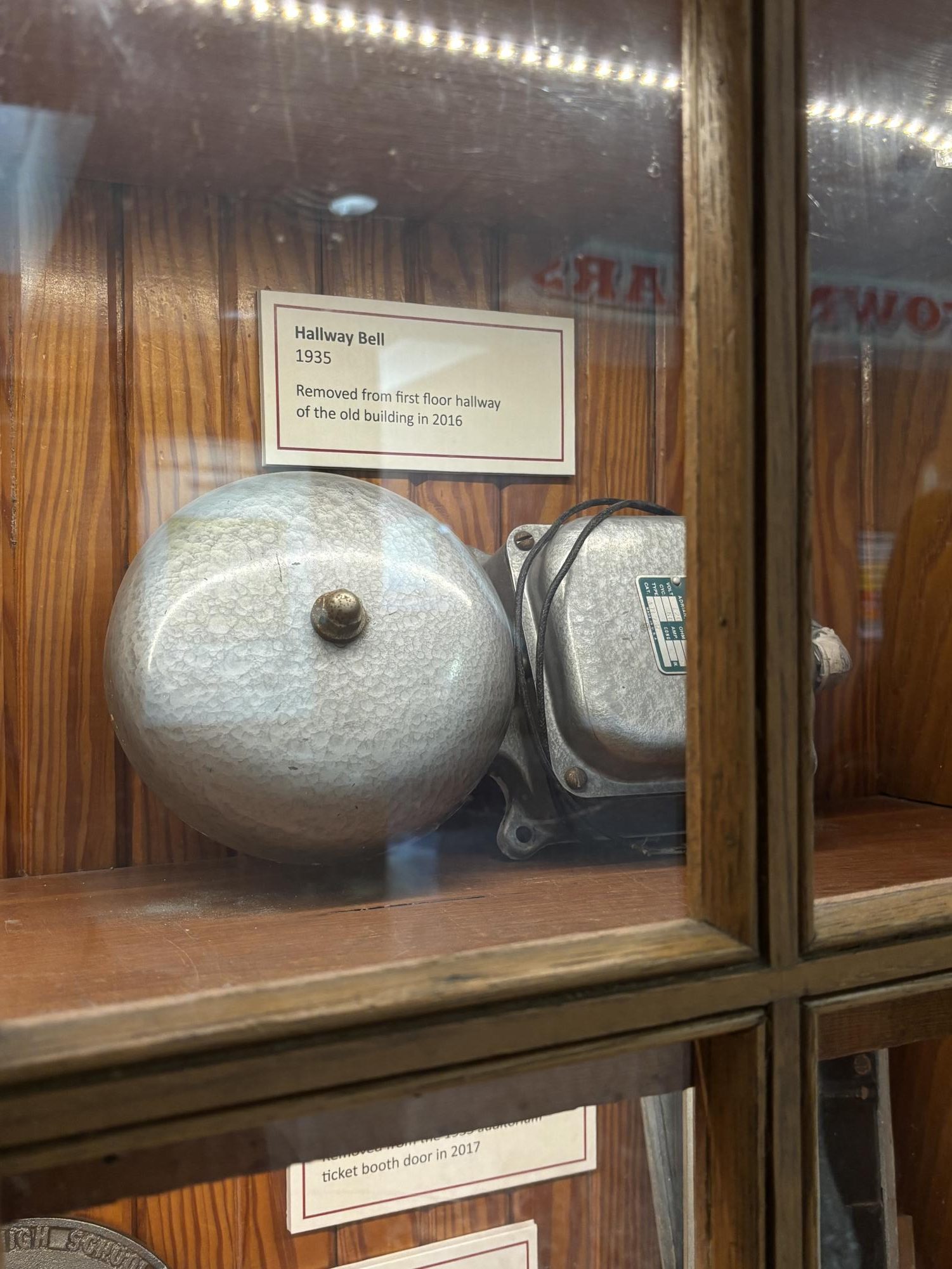
Two 1935 relics from the Freshman Building hallways were removed in 2016 and are now displayed in the wooden glass case near the old building elevator by the guidance office.
From the 100’s hallway, a hallway bell was removed. The bell is very representative of its time, made up of a silver metal and adorned with rusted nuts and bolts.
The other item that was removed was a hallway light fixture from the 300s. The light is a shiny, white bulb with a metal fastener.
Two decades later, the Boyertown class of 1951 donated a plaque in memory of BASH students who passed in World War II. The plaque, which is hung at the East Entrance, is made up of a dark gray metal embellished with bronze writing that lists the names of seven BASH students who have sadly passed.
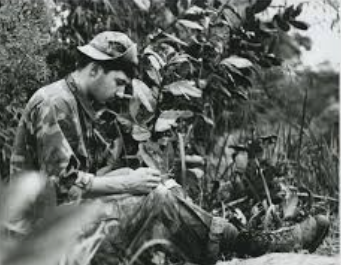
Also at the East Entrance, there is a plaque gifted by the BASH Alumni Marching Unit in 1989 in memory of Boyertown students and community members who died during the Vietnam War. Like the other plaque from 1951, it is also made out of metal and honors seven individuals.
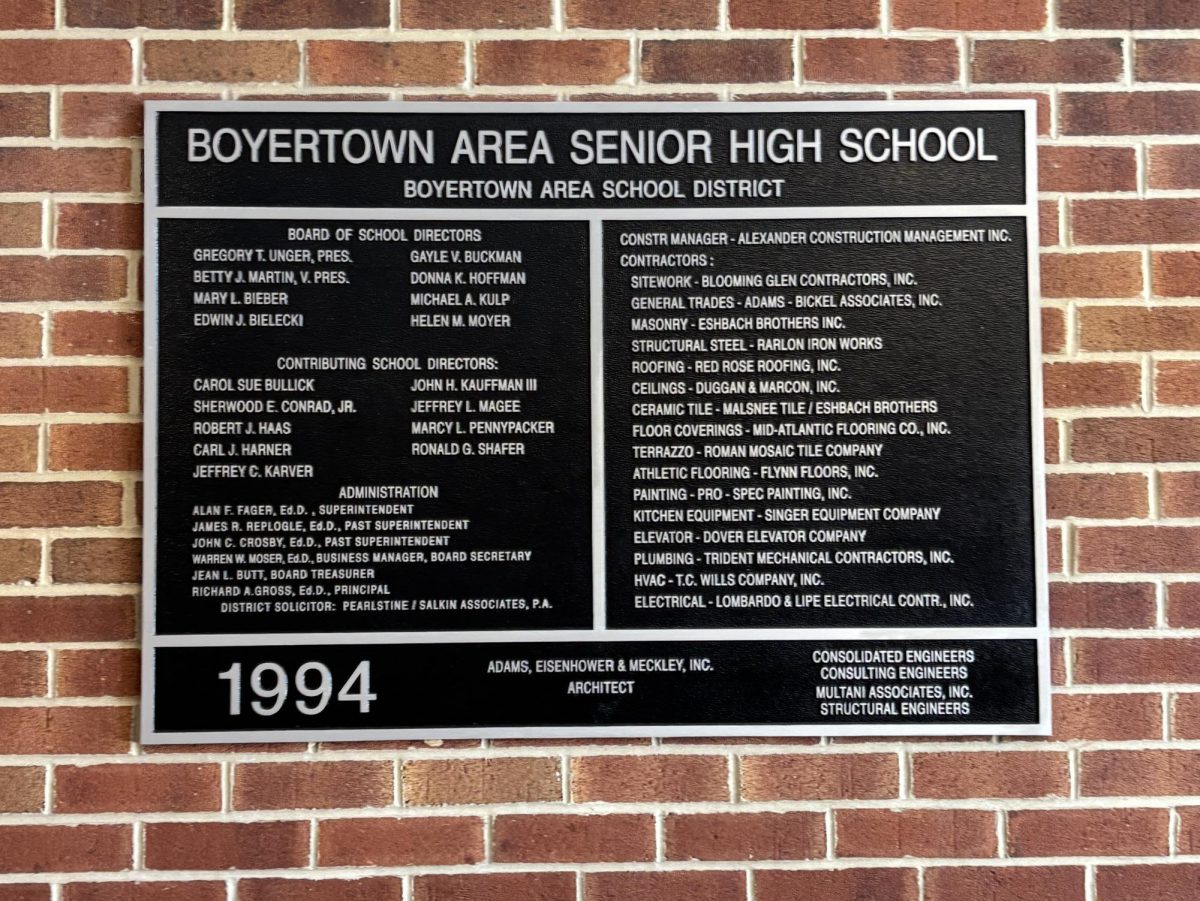
Five years later, in 1994, a large plaque was put up to honor people who played a part in running and building the high school. The black and silver plaque is really important and key in BASH’s history- highlighting the many people who made it possible.
It is a shame that most BASH students do not notice the plaques and historical items around the school enough to acknowledge their interesting significance, but it does not mean that some students do not spot them in general.
Even though it is assumed that most don’t even know they exist, some students do spot them occasionally, but never have enough interest to look further.
One student, Ella Connors, said, “I do notice and glance at the plaques, but I never stop to glance at them. They could be interesting to me, but I never go out and look at them in depth.”
Aside from the physical plaques and other objects that embody BASH’s history around the halls, there is so much more to it- do not be afraid to explore.